
In the vast expanse of the night sky, moon, stars, planets, and galaxies await discovery, offering an infinite canvas for both seasoned astronomers and curious enthusiasts. Astrophotography, the art and science of photographing celestial objects, brings this canvas to life, revealing the hidden beauty of the universe. With the aid of telescopes, we can transcend the limitations of our eyes, capturing stunning images of distant worlds and cosmic phenomena from our own backyards. This blog post delves into the allure of astrophotography, exploring why this hobby captivates so many and how it allows us to connect with the mysteries of space right from Earth.
Astrophotography
When we attach a DSLR camera to a telescope, the telescope acts as a powerful lens, focusing and magnifying distant light onto the sensor. This synergy between camera and telescope significantly enhances our ability to capture high-resolution images of celestial objects. The telescope’s optics gather and concentrate light from distant stars, planets, and galaxies, directing it onto the camera’s sensor with remarkable precision.
This combination allows photographers to capture highly detailed and vivid images of celestial objects, revealing intricate structures and phenomena such as star clusters, nebulae, and the surfaces of planets. With the right equipment and techniques, astrophotography becomes a window into the cosmos, enabling us to explore and appreciate the universe’s beauty and complexity from the comfort of our own backyards.
Star map
There are several software options available for analyzing star maps, each offering unique features to enhance the stargazing experience. One of the most notable is Stellarium, a powerful tool that provides a realistic sky simulation. Stellarium is particularly valuable because it can connect with Celestron telescopes, allowing users to automatically point to stars and planets with precision. This seamless integration makes it an excellent choice for both amateur and professional astronomers looking to explore the night sky with ease.
Another fascinating alternative is Sky View, a mobile app designed for stargazing enthusiasts on the go. Sky View stands out with its live sky tracking functionality, utilizing augmented reality to overlay celestial objects onto the camera’s view. This feature, combined with gyro information from the device, enables users to identify stars, constellations, and planets in real-time simply by pointing their phone at the sky. Sky View’s intuitive interface and interactive capabilities make it a fun and educational tool for anyone interested in astronomy.
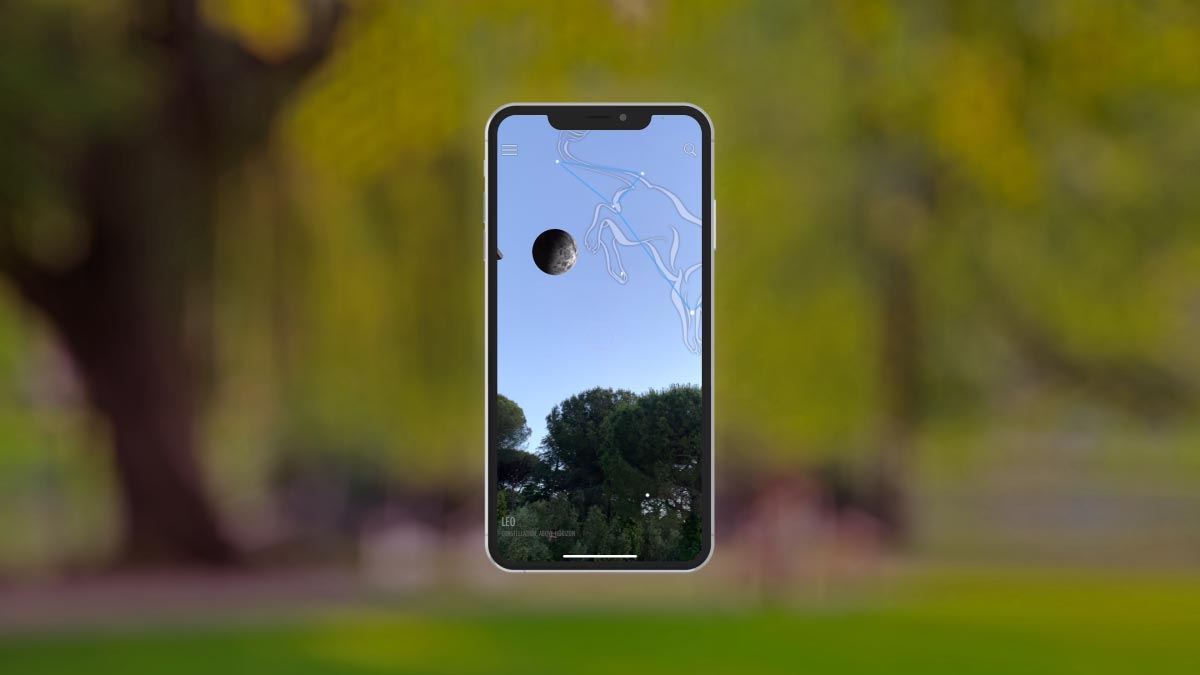
Or a more code-based alternative using Wolfram Mathematica. AstroGraphics[] gives a map of the sky above the horizon at your current geo location.
AstroGraphics[ AstroReferenceFrame -> {"Horizon", DateObject[{2024, 6, 13, 22, 0, 0}]}, AstroBackground -> "GalacticSky"]
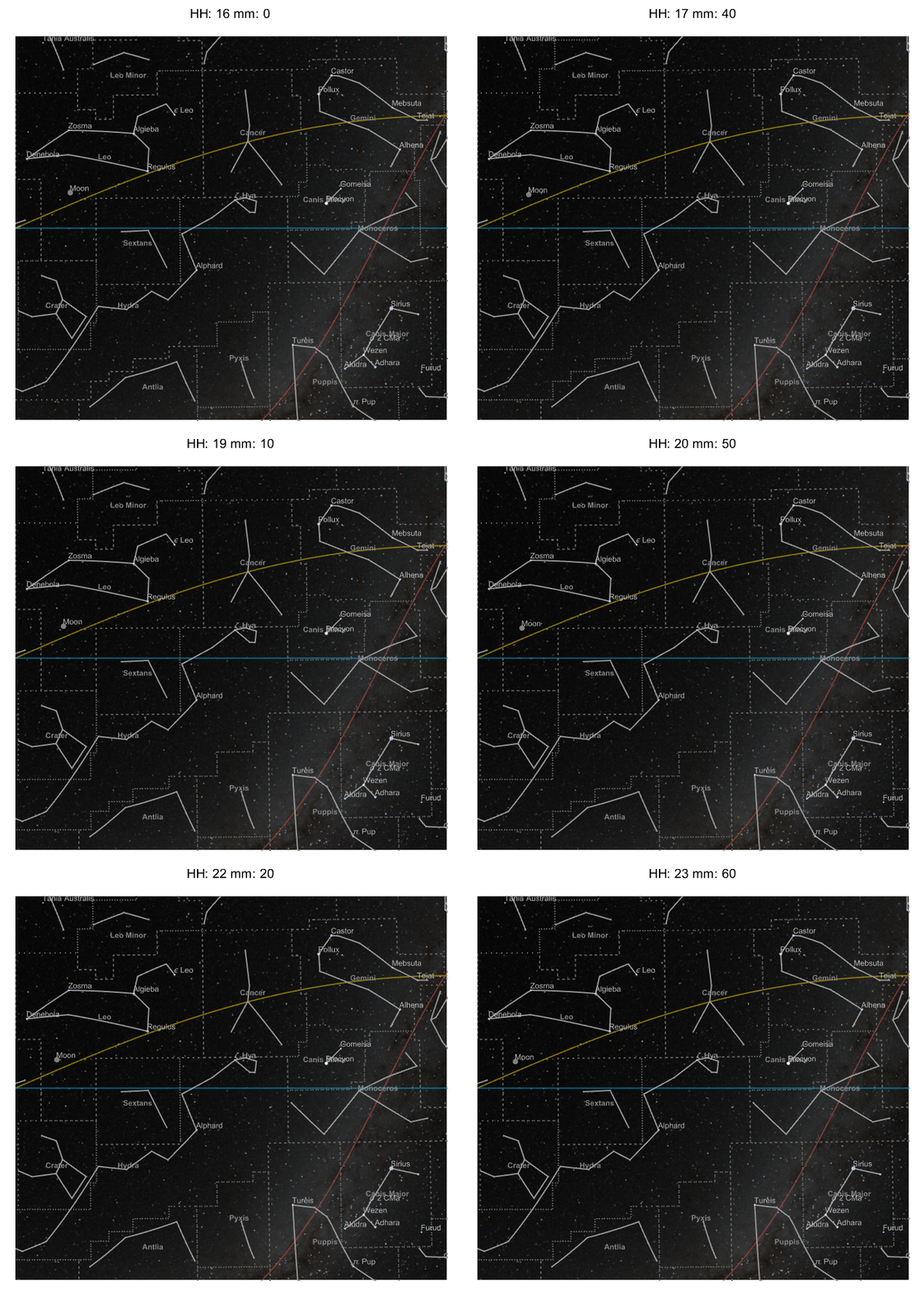
Create the two frame generation function
img[hs_] :=
 AstroGraphics[
  AstroReferenceFrame -> {"Horizon",
    DateObject[{2024, 6, 13, hs[[1]], hs[[2]], 0}]},
  AstroBackground -> "GalacticSky"]

img1[hs_] :=
 GraphicsColumn[{Text[
    "HH: " <> ToString[hs[[1]]] <> " mm: " <> ToString[hs[[2]]]],
   AstroGraphics[
    AstroReferenceFrame -> {"Equatorial",
      DateObject[{2024, 6, 13, hs[[1]], hs[[2]], 0}]},
    AstroBackground -> "GalacticSky",
    AstroRange -> {{90, 180}, {-40, 40}}]}]
Generate the time steps
h = Table[i, {i, 16, 23}];
mm = Table[j, {j, 0, 60, 5}];
Generate the frame list
Do[
 Do[
  AppendTo[imgs, img[{h[[i]], mm[[j]]}]];,
  {j, 1, Length[mm]}]
 ,
 {i, 1, Length[h]}
 ]
Save the gif
Export[NotebookDirectory[] <> "space.gif", imgs]
Moon
The moon, Earth’s only natural satellite, has been the subject of countless myths and legends, but it also harbors some amusing truths. For instance, did you know that the moon is actually drifting away from Earth at a rate of about 1.5 inches per year? That’s right, it’s like the moon is slowly backing out of our cosmic dance, inching away bit by bit. Another hilarious fact is that astronauts who have walked on the moon reported that the moon dust smells like burnt gunpowder. Imagine bringing back souvenirs that make your house smell like a fireworks display! Plus, the moon has “moonquakes” caused by the Earth’s gravitational pull—it’s like the moon is constantly shivering from an interplanetary cold.
Now, speaking of the dark side of the moon, there’s a joke that might tickle your funny bone: Why did the Chinese astronaut go to the dark side of the moon? To see if the rumors were true that it’s full of hidden fortunes! Though the dark side of the moon is no different from the near side, it’s always fun to imagine it’s hiding all sorts of cosmic secrets, maybe even a few space treasures left by extraterrestrial visitors or ambitious lunar settlers.
Shoot
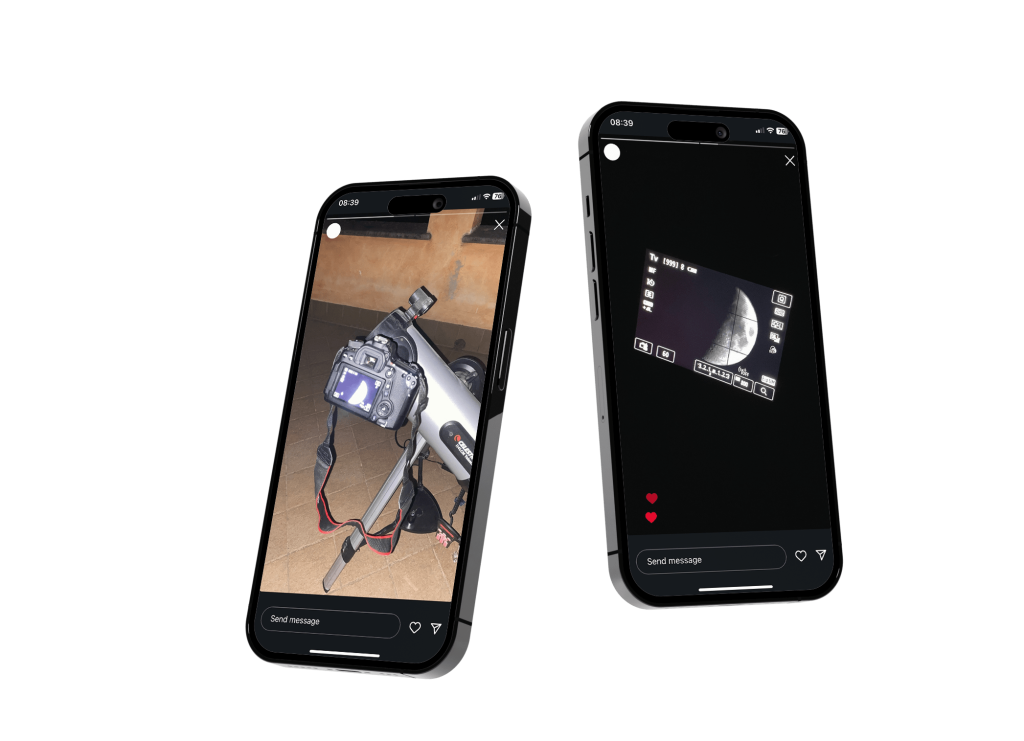
We’re nearly set! The telescope is equipped with the camera, the lights are mostly turned off, and we’ve queued up some Instagram stories. Let’s check out the results:
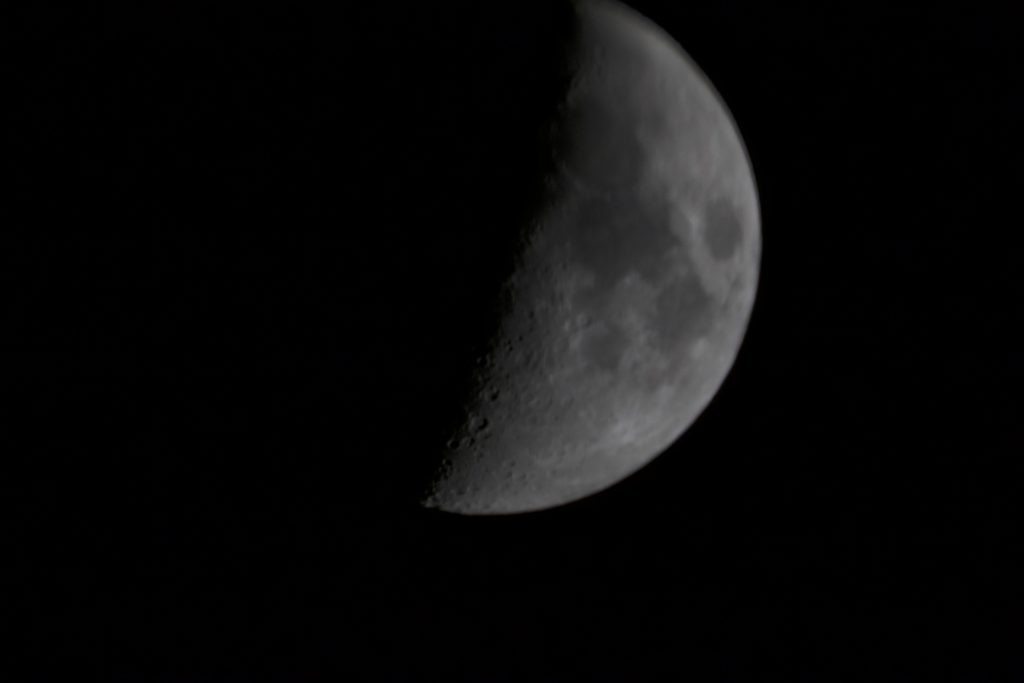
And I don’t think it’s possible to get worse results!
I’m sorry the photo turned out blurry. The focal mechanism in telescopes can be quite challenging to align perfectly, especially under certain conditions. Even slight misalignments can significantly impact the clarity of the image. The complexity of ensuring every component is precisely positioned is a common issue faced by many astronomers, both amateur and professional.
Furthermore, external factors like atmospheric conditions can also affect the image quality. Even with a good alignment of the telescope’s focal mechanism, variations in air density and movement can cause the light to scatter, resulting in less sharp images. In addition, the camera is heavy and the shooting movement introduces further vibrations.