My supervisor called with a last-minute question: would I like to join him in Brussels for the second day of the Advanced Virtual Human Twins Platform annual event?
“Of course!” Because a last-minute international day trip is obviously the most straightforward thing to fit into a research week.
It was an invitation that immediately caught my attention. Most days, my work involves building and understanding simulations. The visit was a chance to step outside the individual model and consider how that work can become useful across a much wider research ecosystem.
Why Brussels, and why Virtual Human Twins?
The first Advanced Virtual Human Twins Platform annual event took place on 20–21 October 2026 in Brussels and online.
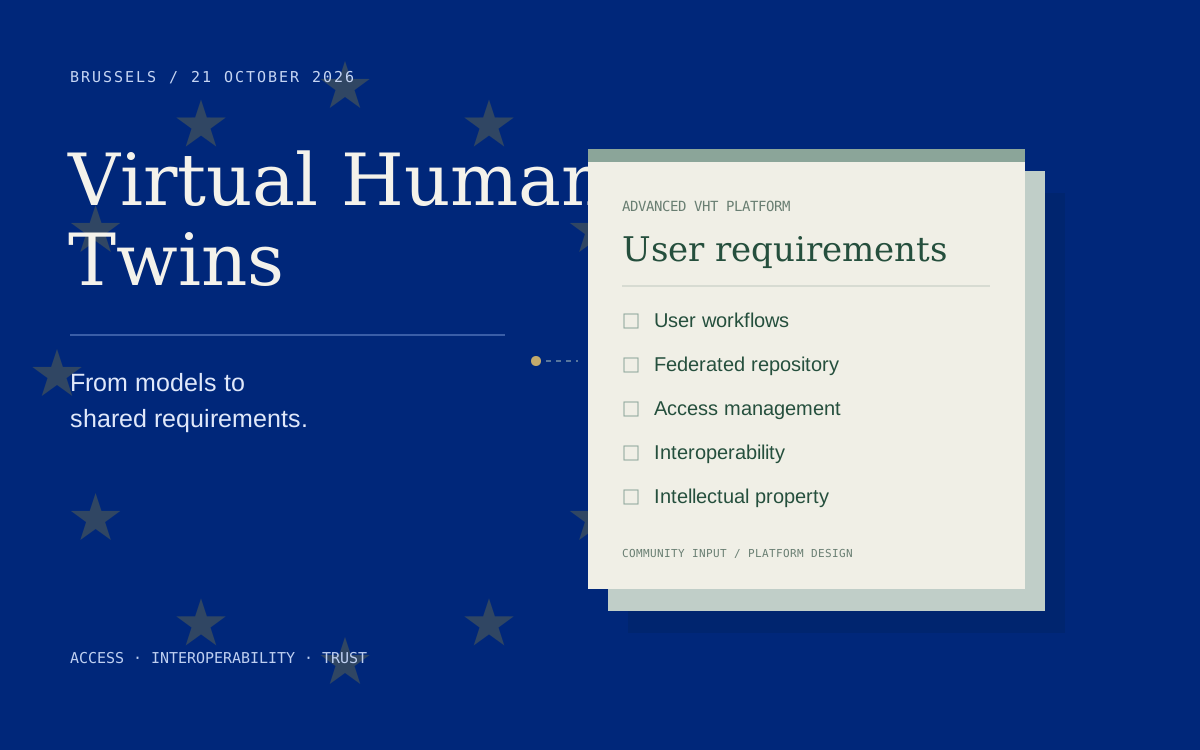
I attended the second day, on 21 October. Its programme covered user workflows, a federated repository, access, orchestration and intellectual-property management.
A platform around the models
The VPH Society’s account of the event describes an open-source, federated infrastructure intended to connect health data, computational models and computing resources while institutions retain control of their assets. That distinction matters: sharing a workflow does not have to mean giving up control of everything behind it.
Its architecture spans a modelling framework, a federated repository, access management, orchestration, computing and storage services, and intellectual-property policies. The reported roadmap targets an initial viable platform in September 2027 and a full release in September 2028. These are planned milestones, rather than capabilities already available.
For someone working with biomechanical simulations, this raises a practical question: what has to travel with a model for another researcher to use it responsibly? Geometry and numerical results are only part of the answer. Assumptions, boundary conditions, software dependencies and the meaning of the outputs also need to remain understandable.
Can another researcher understand the assumptions behind the result?
Can the required data and software be accessed under clear conditions?
Can the workflow be repeated and its outputs interpreted?
A day in Brussels
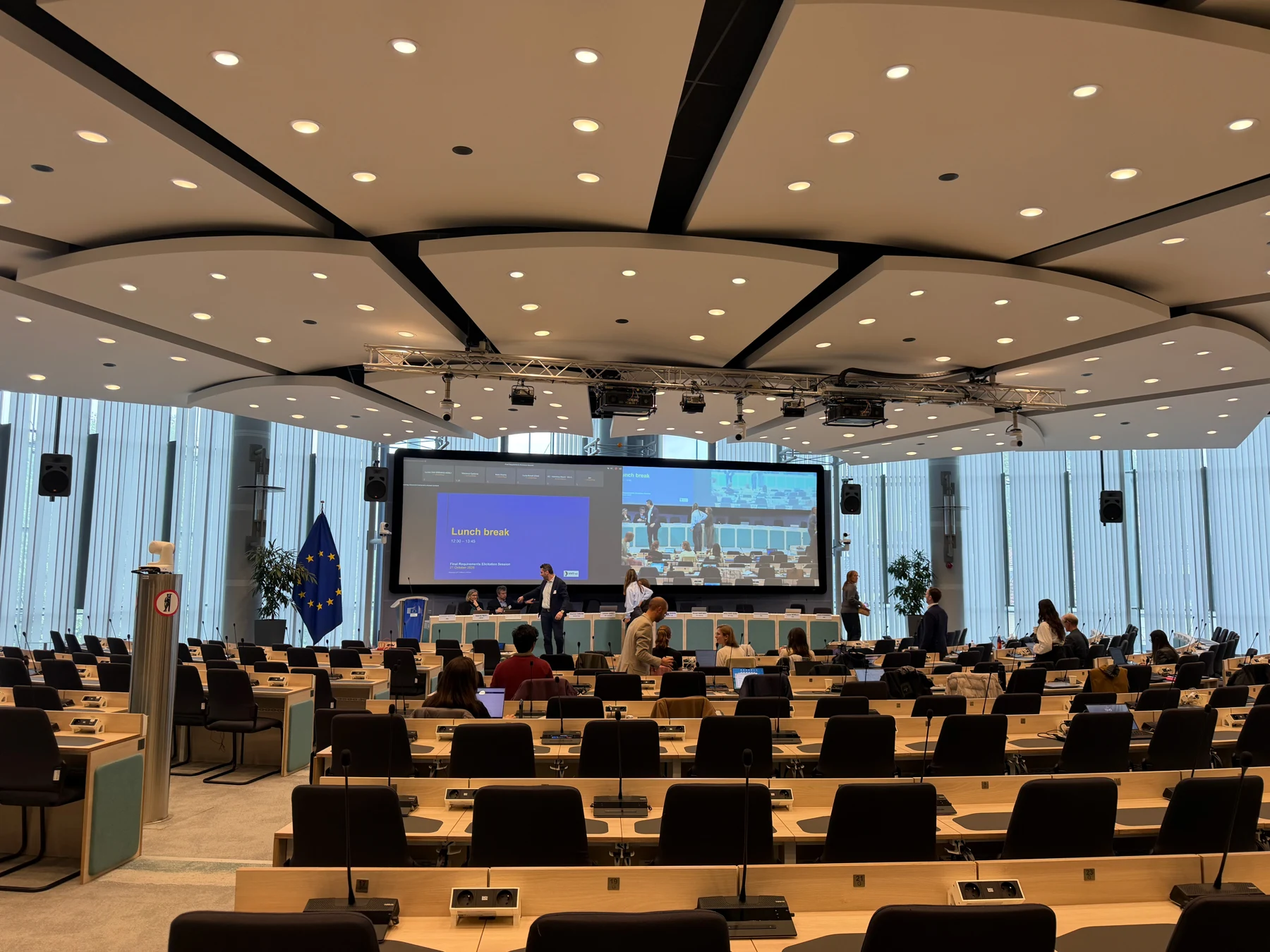
Most of my day-to-day research starts with a more bounded problem: a vessel, a material response, a biological process or a numerical method. A platform discussion changes the scale. It asks how separate pieces of work can become discoverable, connected and useful beyond the group that produced them.
This is where the subjects covered on the second day connect to our own work. Access determines whether a workflow can actually start. Orchestration concerns how its steps fit together. Intellectual-property rules help define what can be shared and on which terms. Each belongs alongside the scientific model when we think about its use by someone else.
The day in Brussels brought those questions back to our own research: a model becomes more useful when others can understand its limits, reproduce its workflow and connect it to their work. Contributing to the platform while its requirements are still taking shape is an opportunity to bring those everyday research needs into the discussion.
Read the VPH Society’s event report · Explore the event programme